What to Wear Kayaking in La Jolla, Season by Season

What to wear kayaking in La Jolla depends almost entirely on water temperature, since the tours provide the PFD, paddle and backrest, and your actual bring-list is short. July through October you can paddle in a swimsuit and a rash guard and never think about a wetsuit. December through April, the water drops cold enough that a 3/2 wetsuit stops being optional for most people. Add in the surf-zone launch at the end of Avenida de la Playa, where you will get wet no matter what, and the wardrobe question mostly comes down to two things: the season you're paddling in, and if you've added a snorkel leg. Browse the La Jolla kayak tour options once your gear is sorted.
Quick answer
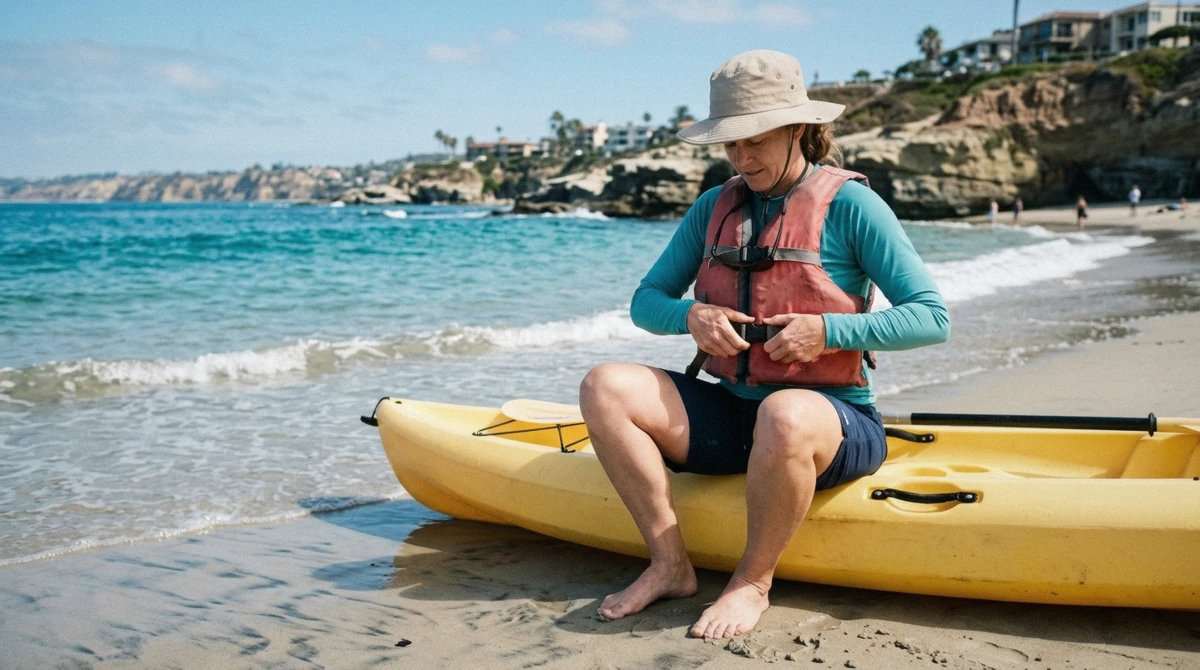
Tours provide the PFD, paddle and backrest, so your own bring-list is short: a swimsuit or rash guard, water shoes, reef-safe sunscreen and a hat with a retainer. From July through October you need no wetsuit at all. May and June call for a spring suit or rash guard, and December through April a 3/2 wetsuit is the practical choice for most paddlers.
Key takeaways
- Tours provide the PFD, paddle and backrest, the core safety gear is covered
- Your own list is short: swimwear, water shoes, sun protection and a secured hat
- Don't wear cotton, denim or tennis shoes with socks, all three stay soaked the whole paddle
- Water temperature ranges from 58°F in winter to 70°F in late summer
- Water shoes or secured sandals are the right footwear call, not sneakers or flip-flops
- December through April, most paddlers want a 3/2 wetsuit; none needed July through October
What to Wear
Base Layer / Swimwear
A swimsuit under quick-dry shorts or a rash guard is the standard kayaking outfit here. Skip anything cotton, since it soaks through at the surf launch and stays wet and cold for the rest of the paddle. A snug fit matters more than style: loose boardshorts catch water and drag, and a swimsuit that shifts around is an annoyance you'll notice for two straight hours on the water.
Sun Protection
A long-sleeve rash guard beats sunscreen alone for the two hours you're exposed on open water with no shade anywhere on the reserve. If you'd rather go sunscreen-only, make it reef-safe, since the Ecological Reserve is a protected marine area and standard chemical sunscreens are the kind of thing a no-take reserve doesn't need more of. Reapply before you launch, not once you're already on the water.
Wetsuit / Outer Layer
Think of a wetsuit as a water-temperature call, not a blanket rule. None needed July through October. A spring suit or rash guard is enough May and June.
December through April, water sits near 58-59°F and a 3/2 wetsuit is the sensible choice for most people, rentable in town for roughly $10-15 if you don't own one. If cold water genuinely doesn't bother you, you can skip it any month, but most first-timers regret going without one in winter.
Footwear
Water shoes or reef booties are the default recommendation here, and for good reason: the surf launch crosses wet sand and a shallow rocky stretch where bare feet and unsecured sandals both lose their grip.
- Water shoes or reef booties: right call for almost everyone, grip on wet rock and comfortable for two hours in a kayak
- Sneakers: fine for walking the ~150 yards from the shops to the launch, but not for the water itself, since wet sneakers stay heavy and soaked the rest of the day
- Sandals with a secured back strap: acceptable, but water shoes still grip better at the launch
- Barefoot: fine once you're seated in the kayak, but risky at the surf entry where shells and rock hide under the sand
- Flip-flops or unsecured sandals: not okay, they wash off in the surf and you'll paddle the rest of the trip without them
One color note before the gear list: nothing you wear needs to match anything, but a few choices genuinely help or hurt on the water.
| Color | Good? | Why |
|---|---|---|
| White | Mixed | Reflects heat well on a hot afternoon, but shows sunscreen streaks and salt stains fast |
| Black | Bad in summer sun | Absorbs heat on a hot midday paddle, fine for a cool winter morning |
| Bright colors (orange, yellow) | Good | Easier for your guide to spot you in the group from a distance |
| Earth tones (tan, olive) | Neutral | No real advantage here, this isn't a wildlife-shyness situation |
| Neon rash guards | Good | Same visibility logic as bright colors, plus they photograph well against the water |
| Cotton in any color | Bad | Stays wet and heavy for the whole paddle regardless of shade |
| Quick-dry synthetic | Good | Sheds water fast and doesn't chafe once it's wet |
What to Bring
Beyond what you're wearing, this is the actual bring-list, checked and short on purpose.
- Reef-safe sunscreen: reapply before launch, not mid-paddle
- Water shoes or reef booties: grip at the surf entry, comfortable for two hours
- Hat with a chin strap or retainer: a loose hat loses in the first five minutes
- Sunglasses with a strap: same problem as a loose hat, the ocean keeps whatever it takes
- Waterproof phone case: the surf launch splashes everyone, phones included
- Small cash, a few bills: for tipping your guide at the end
- Change of clothes for after: you will get wet at minimum, possibly soaked
- Light windbreaker: worth having for the boat ride back if the wind has picked up
- Refillable water bottle: no shade anywhere on the two-hour paddle
- Wetsuit or spring suit: only December through June, per the season guide below
Dry bag or waterproof phone case
This is the one item worth being specific about. The surf launch and the paddle back through the break both splash the kayak, and a phone in a pocket without protection is a real risk, not a theoretical one. A basic waterproof pouch is enough for a phone; anyone bringing a real camera should look at a proper dry bag instead.
What La Jolla Kayak Tours Provide (So You Don't Overpack)
Every tour on this site includes the safety essentials. What varies is the extras, so check the specific tour before assuming.
| Item | Usually Provided | Bring Your Own | Notes |
|---|---|---|---|
| PFD (life vest) | Yes | No | Coast Guard-approved, fitted before launch on every tour |
| Kayak and paddle | Yes | No | Tandem or single depending on your booking |
| Backrest | Yes | No | Standard on all guided tours |
| Wetsuit | No | Yes, if paddling December-April | Rent in town for about $10-15 if you don't own one |
| Snorkel gear (mask, fins, snorkel) | Yes, on the kayak and snorkel combo | No, on kayak-only tours | Included when the snorkel leg is part of the booking |
| Dry bag for personal items | No | Yes | Bring your own waterproof pouch for a phone |
| Sunscreen | No | Yes | Reef-safe, since the reserve is a protected no-take zone |
| Water shoes | No | Yes | Not stocked by any operator here, plan to bring your own |
| Drinking water | No | Yes | No shade on the reserve for the full two hours |
| Guide instruction | Yes | No | Every tour includes a certified guide, most useful for first-timers on the 90-minute guided tour |
What NOT to Wear or Bring
This list comes from what actually causes problems on the water, not generic packing advice.
- Cotton clothing of any kind: soaks through at the launch and stays cold and heavy the whole paddle
- Denim: the worst possible fabric here, it gets heavy wet and never dries during the trip
- Jewelry: rings and necklaces get lost in the surf zone and never come back
- Flip-flops or loose sandals: wash off at the launch, leaving you barefoot for the rest of the trip
- Tennis shoes with socks: soaked socks inside soaked shoes is the single most common regret I hear back at the dock
- Glass containers or bottles: not allowed on the water, bring a reusable bottle instead
- Anything you can't afford to lose or get wet, including a phone with no waterproof case
Packing by Season in La Jolla
Here's the wardrobe by season, built around real water temperatures rather than the calendar month alone. Full month-by-month conditions, crowds and sea state live on the best time to kayak in La Jolla; this is the packing version.
| Season | Water °F | What to wear |
|---|---|---|
| Winter (December-February) | 58-59°F | 3/2 wetsuit, water shoes, a warm layer for the walk back |
| Spring (March-May) | 59-63°F | Spring suit or thick rash guard, water shoes, sunscreen |
| Early Summer (June) | 66°F | Rash guard or thin spring suit, sunscreen, a light windbreaker for the gray mornings |
| Summer (July-August) | 68-70°F | Swimsuit and rash guard, no wetsuit needed, reef-safe sunscreen |
| Autumn (September-November) | 62-69°F | Rash guard through September, add a spring suit by November as water cools |
September is the one month where the summer wardrobe still works but the crowds have already thinned, per the best-time guide linked above.
Dressing for the Kayak and Snorkel Combo
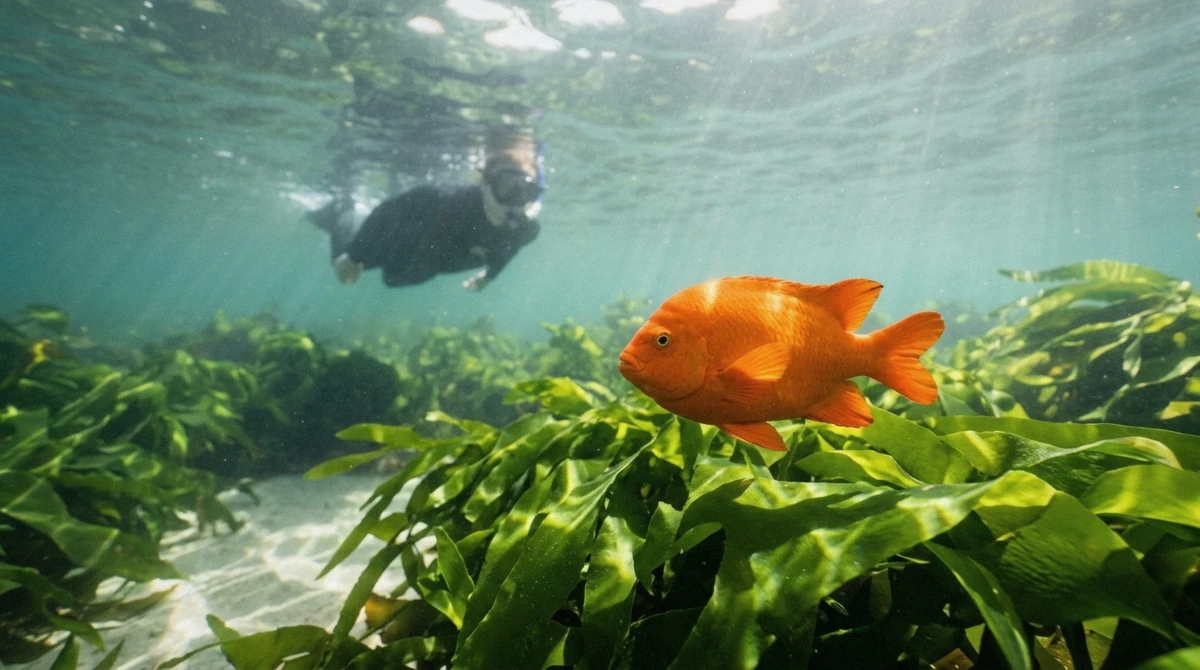
The kayak and snorkel combo tour changes the wardrobe math slightly, since you're getting fully wet on purpose partway through instead of just at the launch. A full swimsuit under a rash guard works better than boardshorts alone, since you're paddling first and swimming second. Snorkel gear, mask, fins and snorkel, comes included on that tour, so don't bring your own unless you have a specific mask fit you rely on.
Anyone snorkeling outside of summer should treat the wetsuit question as a firmer yes than a kayak-only paddler would, since floating still in the water chills you faster than paddling does.
What to Wear, By Situation
If you run cold even in warm water
bring a rash guard or thin spring suit even in July and August, when most paddlers need nothing extra
If you're booking the sunset tour
add a light layer for the ride back, since the air cools faster than the water once the sun drops
If you're adding the snorkel leg
wear a full swimsuit under your rash guard, not just boardshorts, since you'll be floating still in the water partway through
If you don't own a wetsuit and you're paddling December through April
rent one in town for about $10-15 rather than skip it, since the cold at that time of year surprises most first-timers
If you wear glasses
bring a strap or an old pair you don't mind losing, since the surf launch is exactly the moment glasses go overboard
You Will Get Wet at the Launch
The surf-zone launch is the one part of the trip where getting wet isn't a maybe, it's the plan. Expect a splash crossing the break at minimum, and pack accordingly: a dry bag for the phone, a change of clothes waiting in the car, and clothing you don't mind getting soaked in the first five minutes. The mechanics of timing that launch through the wave sets is its own topic, covered fully on is kayaking in La Jolla safe.
Frequently Asked Questions
Do I need water shoes for a La Jolla kayak tour?
They're the best footwear choice, not strictly mandatory. The surf launch crosses wet sand and shallow rock, and water shoes grip better there than bare feet, sneakers or sandals.
Is a wetsuit necessary for kayaking in La Jolla?
Not from July through October, when water runs 66-70°F. December through April, with water near 58-59°F, most paddlers want a 3/2 wetsuit, rentable in town for about $10-15.
Can I wear jeans kayaking in La Jolla?
No. Denim gets heavy the moment it's wet and never dries during a two-hour paddle. It's the single worst fabric choice for this trip.
Can I wear shorts kayaking in La Jolla?
Yes, as long as they're quick-dry material over a swimsuit, not cotton. Boardshorts or swim trunks both work fine.
What should I NOT bring on a La Jolla kayak tour?
Skip cotton clothing, jewelry, flip-flops, and glass containers. All four either cause a real problem on the water or simply don't survive the trip.
Will my phone get wet on a kayak tour?
Likely, at least a splash, since the surf launch soaks the kayak on the way out. A basic waterproof phone case or dry bag solves this.
Does the tour provide snorkel gear?
Yes, on the kayak and snorkel combo tour, mask, fins and snorkel are included. Kayak-only tours don't include or need it.
Most of what people worry about packing for this trip, they don't actually need. Tours hand you the PFD, the paddle and the backrest, which covers the gear that actually keeps you safe. What's left is a short list: something quick-dry to wear, shoes that won't wash off, sun protection, and a plan for the phone.
Match that list to the season you're paddling in and you're set.