Is Kayaking in La Jolla Safe? The Honest Answer and Who Should Reconsider

Kayaking in La Jolla is safe for the vast majority of people who book a guided tour, structured around a mandatory life vest, an adult-and-guide-led launch through the surf, and an operator who simply doesn't run the trip when conditions say no. Is kayaking in La Jolla safe for you personally is the harder question, and it depends on things like your weight, your due date, or your comfort with getting splashed the moment you leave the sand. When I went through every operator's stated restrictions and cancellation rules for this guide, the two questions that came up constantly were what the wet, surf-zone start actually feels like and who the trip genuinely isn't built for. Below is the honest version of both, plus the full restrictions table.
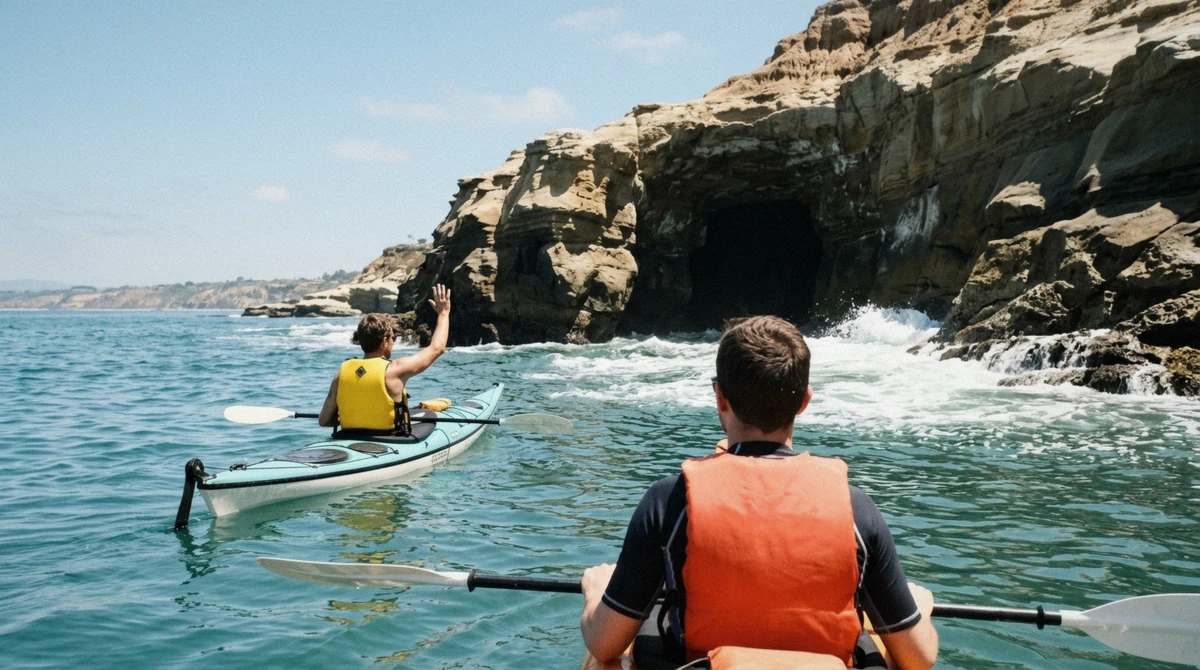
Quick answer
Kayaking in La Jolla is safe for most people booking a guided tour: everyone wears a Coast Guard-approved life vest, guides time the launch to the surf, and operators cancel outright when wind or swell crosses their own threshold. It isn't for everyone, though. Anyone pregnant, well outside the weight limits, or not a confident swimmer for the snorkel combo should read the restrictions below before booking.
Key takeaways
- Every kayak seat requires a Coast Guard-approved life vest, sized to the rider and worn the whole time, no exceptions
- The wettest, riskiest moment of the trip is the surf-zone launch and landing, not the paddling itself
- Operators, not you, make the call to cancel on high surf or wind advisories, with free cancellation on your side too
- Tandem kayaks start at age 5, single kayaks at 15, and there are separate individual and combined weight caps
- Pregnancy isn't an automatic no everywhere, but it's a real conversation to have with your doctor and the operator first
- Non-swimmers can still do a kayak-only tour; the snorkel leg is the one that requires confident swimming
What Actually Makes This Trip Risky
The riskiest few minutes of a La Jolla kayak tour happen right at the start and the end, launching and landing through the surf line, where you should expect to get splashed or briefly swamped as guides time the kayak through a gap between sets, not out on the flat stretch of paddling in between.
Past the surf line, the main physical demand is distance rather than danger: roughly two miles of open-ocean paddling round trip on the 2-hour tour of all seven caves, a bit less on the shorter 90-minute option, which a fit adult handles easily but which is worth knowing about if you're not used to sustained paddling. Guides set the pace and can slow the group for anyone falling behind, rather than leaving weaker paddlers to catch up on their own.
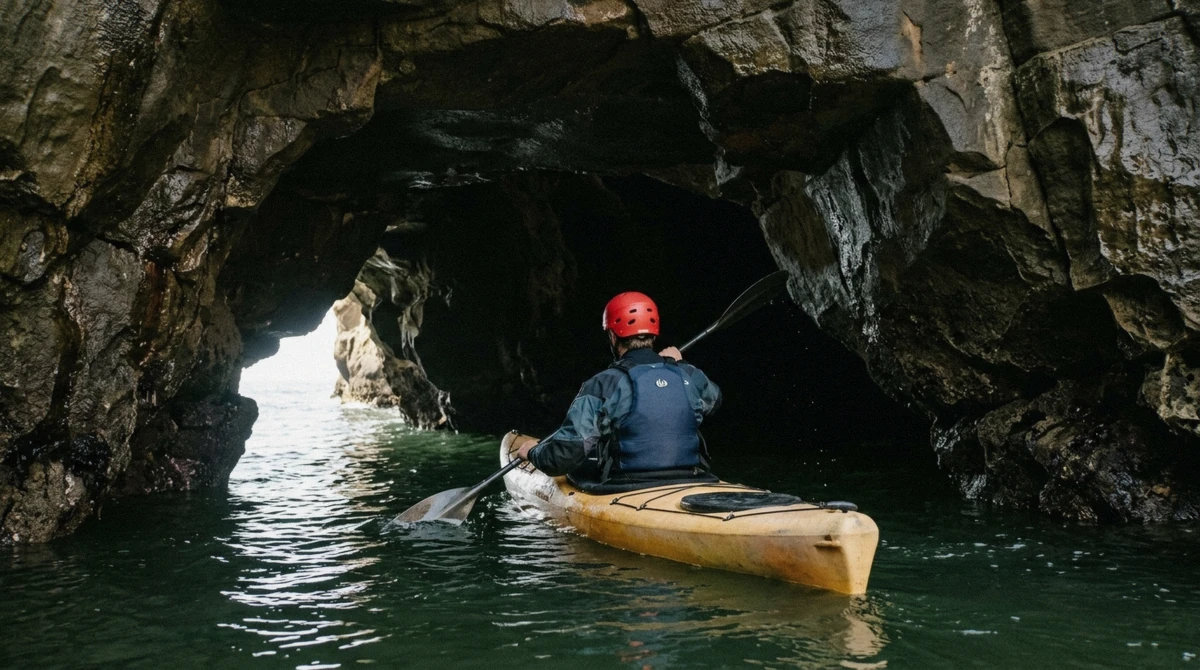
Inside the caves themselves, the risk shifts to surge rather than distance. Lifeguards close cave entries outright when swell pushes water in and out of the mouths hard enough to be dangerous, and a guide simply won't take the group in on a day like that, tour booked or not.
Two other rules worth knowing, though neither is really a safety restriction: sea caves are strictly guided-tour-only under city rule, independent kayak renters can't enter them at all, and our kayaking without a tour guide covers that in full. Guides also ask everyone to keep hands inside the kayak near the sea lion haul-outs, with the full distance rule in our sea lion and wildlife guide.
| Situation | What a good guide does | Sign the trip should change |
|---|---|---|
| The surf is bigger than usual at the launch | Times the kayak through a gap in the wave sets instead of pushing straight through | Guide pauses the group and waits, rather than launching on a fixed schedule regardless |
| Swell is pushing hard into a cave mouth | Skips that cave and moves the group to a calmer one, or runs the tour as a paddle-only trip | The Clam and Sunny Jim's are the two most surge-sensitive; expect them to be the first dropped |
| Wind picks up faster than forecast mid-tour | Cuts the route short and heads back rather than finishing the full loop | Choppier water, harder steering, and a guide who starts talking about heading in early |
How Weather and Surf Decide Whether the Tour Even Runs
Whether a La Jolla kayak tour runs at all is decided by the operator against a wind and surf threshold, not by how the ocean looks from the parking lot, and that call gets made the morning of, sometimes the night before for an early slot.
High surf and wind advisories are the trigger for an outright cancellation, and lifeguards separately close cave entries when surge makes them unsafe even on a day the tour itself still runs as a paddle. Free cancellation is standard on the booking page here, so holding a slot doesn't lock you into going out in conditions the operator itself wouldn't run. Morning departures carry the best odds of calm water, since San Diego's onshore wind reliably builds through the afternoon.
Cold water outside the summer window is a comfort issue, not a safety restriction. What to actually wear for it is covered in our what to wear guide, not here.
Who Shouldn't Do It: Restrictions at a Glance
The restrictions below come straight from operator policy, not a guess, and the two most commonly missed ones are the combined weight cap on a tandem kayak and the fact that a kayak-only tour and the snorkel combo have different swimming requirements.
| Restriction | Rule | Applies to |
|---|---|---|
| Minimum age, tandem kayak | 5 years old, paddling with an adult | All guided kayak tours |
| Minimum age, single kayak | 15 years old | Solo kayak bookings |
| Weight, individual | Up to about 275 lbs per rider in a single kayak | Solo kayakers |
| Weight, combined | Up to about 450 lbs total in a tandem kayak | Tandem pairs, adult and child or two adults |
| Life vest | Coast Guard-approved, provided, worn at all times | Every rider, every tour |
| Swimming ability | Not required for kayak-only tours; confident open-water swimming required for the snorkel leg | Kayak & Snorkel Combo Tour |
| Pregnancy | No blanket ban, but check the tour's booking-page restrictions and talk to your doctor first | All tours, given the jolt of the surf launch |
None of this is enforced by eyeballing you at the dock. It's built into what you confirm when you book, so the honest move is to book to your real weight and swimming ability rather than rounding in your favor.
- Your actual combined weight against the 450-pound tandem cap, not a hopeful estimate
- Your swimming ability against the specific tour, kayak-only versus the snorkel combo
- A heart condition, high blood pressure or recent surgery discussed with your doctor beforehand
- Pregnancy checked against that tour's own booking-page restriction, not assumed either way
- Your comfort with getting splashed or briefly swamped in the first minute of the trip
What Guides Actually Do About the Fears People Have
Most of the fear around this trip is really fear of the surf launch, and the actual answer is procedural, not reassuring noise: guides watch the wave sets and send kayaks out or bring them in on a gap, the same way a lifeguard reads a rip current, rather than launching everyone on a fixed schedule regardless of what the ocean is doing.
A capsize in the surf zone is the scenario people picture most, and it's also the one guides are set up to handle immediately, since they're right there in the group rather than watching from a boat. Getting back in from a stable sit-on-top kayak in shallow water is quick, and it happens closer to shore than most people expect, not out past the caves.
For anyone anxious about being far from shore, the actual distance is closer to a mile out, not open crossing, and every rider is already wearing enough flotation to stay at the surface without kicking or paddling at all.
What If Something Goes Wrong
The kayak flips in the surf
You go into the water still wearing your vest, which is the entire point of it. A guide is close enough in the group to help you flip the kayak back over and get back in, in water shallow enough to stand in near the launch. What you do: stay with the kayak, keep the vest on, and follow the guide's instruction rather than trying to swim for shore on your own.
The weather turns while you're already out
Guides cut the route short and head the group back in rather than finishing the planned loop. What you do: follow the pace they set, since a guide reading changing wind or swell in real time is a better judge of the fastest safe way in than pushing to see one more cave.
A cave you were hoping to see is closed on surge
The guide skips it and either substitutes a calmer cave or extends time at the ones still open. What you do: nothing, really, other than trusting that a guide who cancels a cave entry on a marginal call is the same guide you want making every other call that day.
The one thing actually in your control in any of these scenarios is which tour you book and how honestly you answer its restrictions when you do. A good guide can only manage the conditions, not a rider who under-reported their weight or skipped mentioning they can't swim.
If Any of This Applies to You, Reconsider or Ask First
If you're pregnant
check the booking page's own restriction and talk to your doctor before reserving a spot, given the jolt of the surf launch
If you have a heart condition or high blood pressure
ask your doctor about the exertion level of roughly two miles of paddling before you book
If you can't swim confidently in open water
book a kayak-only tour, not the snorkel combo, and keep the vest on the whole time
If you or your paddling partner are near the combined 450-pound tandem cap
ask the operator directly before booking rather than finding out at the dock
If you have a bad back or a recent surgery
picture sitting low in a kayak seat for up to two and a half hours before committing to the longer tours
If a Restriction Rules You Out
There isn't a gentler version of the sea cave paddle itself, since every tour here launches through the same surf line, but the tour you pick still matters. A non-swimmer or someone unsure about a longer sit, ruled out of the snorkel combo or the 2.5-hour trip, can still book the 90-Minute Guided Sea Cave Kayak Tour, the shortest time in a kayak seat and no swimming requirement at all. For families where one adult is excluded and one isn't, that shorter tour is also the easiest one to split into two turns rather than committing to a longer trip neither adult can swap out of.
Full guidance on which tour fits which kid, not just which restriction, is in our kayaking with kids guide.
Frequently Asked Questions
Is kayaking in the La Jolla sea caves dangerous?
Not for the vast majority of guided riders. The structure, a life vest on everyone, a guide reading the surf before launch, and an operator willing to cancel outright on bad conditions, is built specifically around the two moments that carry the most risk: the surf-zone launch and landing.
Can I kayak in La Jolla while pregnant?
There's no blanket ban across every operator, but the surf launch involves a real jolt, so check the specific tour's booking-page restrictions and talk to your doctor before reserving a spot.
Is there a weight limit for La Jolla kayak tours?
Yes, and there are two separate numbers. A single kayak caps out around 275 pounds for one rider, and a tandem kayak caps out around 450 pounds combined between both riders.
Is there an age limit for kayaking in La Jolla?
A tandem kayak accepts a child from age 5 paddling with an adult. A single kayak requires the rider to be at least 15. There's no published upper age limit.
Do I need to know how to swim to kayak in La Jolla?
No, not for a kayak-only tour, since every rider wears a life vest the entire time. The kayak and snorkel combo is the one tour that requires confident open-water swimming for its snorkel leg.
What happens if the weather turns bad on tour day?
The operator, not you, makes the cancellation call against its own wind and surf threshold, and lifeguards separately close cave entries when surge makes them unsafe. Free cancellation on the booking page means holding a slot doesn't commit you to going out if conditions turn.
Is kayaking in La Jolla safe for someone with a heart condition or a bad back?
Talk to your doctor first either way. Roughly two miles of open-ocean paddling is real exertion for a heart condition, and sitting low in a kayak seat for up to two and a half hours is worth picturing in advance if your back is already a problem.
Kayaking in La Jolla is safe the way most guided ocean activities are safe: not risk-free, but built around a life vest, a guide reading real conditions instead of a fixed schedule, and an operator willing to cancel rather than push a trip that shouldn't run. The restrictions that rule people out are real too, weight caps, the swim requirement on the snorkel leg, the surf-zone jolt that makes pregnancy worth a doctor's input first. Book honestly against those limits and the surf launch is the only genuinely startling part of the whole morning.
Compare the beginner-friendly guided kayak tours in La Jolla before you pick a slot.