Best Time to Kayak in La Jolla: A Month-by-Month Guide

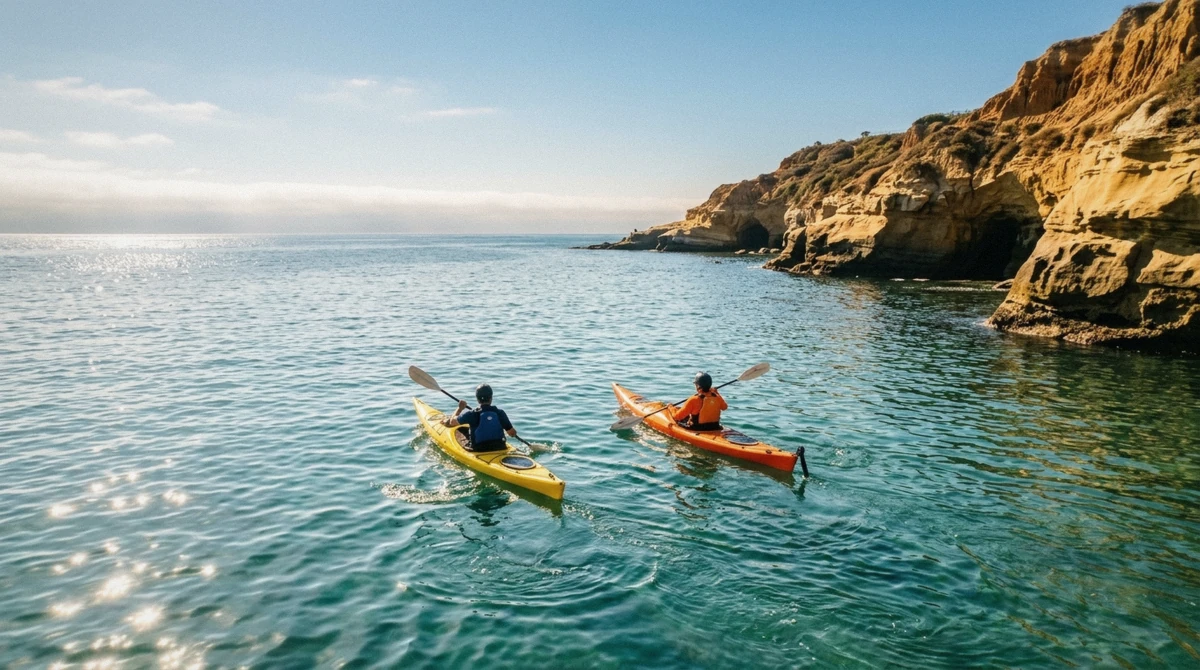
The best time to kayak in La Jolla runs from late August through September, when the water peaks near 70 degrees, the wind lies down most mornings, and the summer surf crowds have already thinned out. June and July run a close second on temperature but carry the marine layer that keeps mornings gray until midday. Winter is the window to avoid for most paddlers, not because the paddling stops, but because bigger swell closes cave entries more often and a wetsuit becomes the honest answer to what to wear. I've launched into this water in every month of the year since 2011, and below is what actually changes, month by month, not the generic "anytime is great" line every other page gives you. Browse the sea cave paddling tours in La Jolla running on your dates once you know which month you're aiming for.
Quick answer
Late August through September is the best time to kayak in La Jolla, with water near 70 degrees and the calmest mornings of the year. June and July run almost as warm but fight the June Gloom marine layer until midday. Winter, December through March, is the window to plan around rather than for, since bigger swell shuts cave entries more often.
Key takeaways
- Best window: late August to September, warmest water and thinning crowds
- Runner-up: June and July, nearly as warm but mornings often stay overcast until midday
- Window to avoid: December through February, when swell most often closes the caves
- Water temperature swings a full 12 degrees across the year, from about 58°F in winter to 70°F in late summer
- Best time of day is early morning, before the onshore wind builds through the afternoon
- Gray whales pass offshore December through March, a bonus sighting on an otherwise colder paddle
Month by Month: Water Temperature and Sea State
Read the table by its last column first. "Best" months combine warm water with calm mornings; "good" months are solid but carry one trade-off, usually wind or fog; "plan around" months are still paddleable, just with a wetsuit and a real chance the caves are closed for the day.
| Month | Water °F | Sea state | What's special |
|---|---|---|---|
| January | 58°F | Winter swell, choppier | Gray whales pass offshore; plan around cave closures |
| February | 58°F | Coldest, most swell-prone | Coldest water of the year; wetsuit weather |
| March | 59°F | Still winter swell | Tail end of gray whale season offshore |
| April | 61°F | Settling down | Water starts warming, swell easing |
| May | 63°F | Calmer, mornings can be gray | June Gloom starts early some years |
| June | 66°F | Calm but overcast mornings | Peak June Gloom, burns off by midday |
| July | 68°F | Calm, clearing skies | Warm water arrives, still some morning haze |
| August | 70°F | Calmest of the year | Leopard shark season builds toward its peak |
| September | 69°F | Calm, thinning crowds | Warmest water lingers, best overall month |
| October | 66°F | Still mild, cooling | Leopard sharks linger into early autumn |
| November | 62°F | Swell starts building | Cooling fast, fewer paddlers on the water |
| December | 59°F | Winter swell arrives | Gray whale migration begins offshore |
The 12-degree spread between February's 58°F and August's 70°F is the single biggest variable in how the paddle feels. Wetsuit needs shift with those numbers, and I cover exactly when you can skip one in what to wear kayaking in La Jolla rather than repeat the full breakdown here.
Crowds and Booking Lead Time by Season
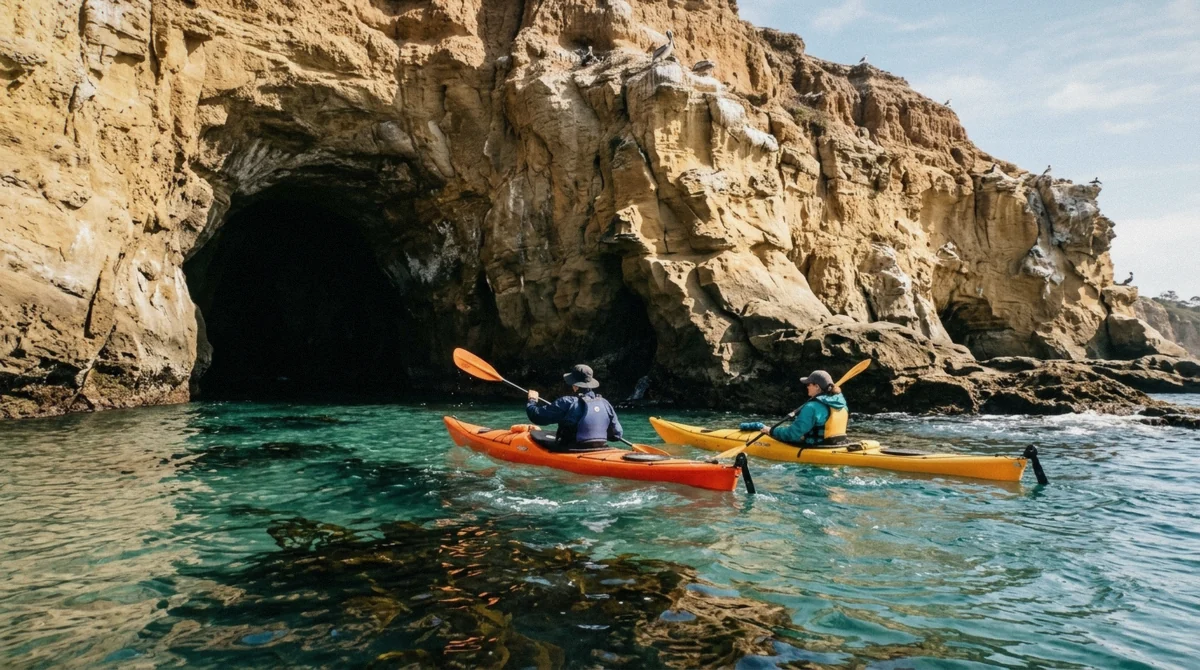
Season drives how far ahead you need to book more than the water temperature does. Here's how the four seasons stack up against each other on that specific question.
| Season | Water °F | Crowds at the launch | Book how far ahead |
|---|---|---|---|
| Spring (Mar-May) | 59-63°F | Light | A few days out |
| Summer (Jun-Aug) | 66-70°F | Heaviest of the year | A week or more for weekend mornings |
| Autumn (Sep-Nov) | 62-69°F | Light, best ratio to conditions | A few days out, a week by November |
| Winter (Dec-Feb) | 58-59°F | Lightest of the year | A day or two is usually enough |
Summer weekends are the one true bottleneck on this list. Every other season, a few days' notice is enough to get the morning slot you want.
The Best Month If You Only Have One Morning
If you can only pick one morning all year, take it in early September. Here's the ranked shortlist I'd give a friend with a single open date.
- Early September: warmest water still holding near 69°F, summer crowds gone, calm morning odds are the best of the year
- Late August: water peaks near 70°F, but weekends still draw a summer crowd at the launch
- Mid-July: water at 68°F and mornings clearing earlier than June, though the marine layer can still linger some days
- Early June: worth it only if your dates are fixed and nothing else is open, since the Gloom sits thickest this month
Best Season by Traveler Type
If you're chasing photos of the sea caves in good light
late August to September, when morning haze is thinnest and the sandstone cliffs hold color longest before the wind picks up
If you're bringing kids or nervous paddlers
July through September, the calmest stretch with the smallest swell and the least surge at the cave entries
If this is your first time in a kayak
any morning June through September, when conditions are most forgiving and cancellations are least likely
If you want the best odds of seeing leopard sharks
August and September, the peak of the season even though the sharks arrive as early as June
If you're working with a tighter budget and can handle a wetsuit
April or November, shoulder months with thinner crowds and milder water than deep winter
Spring (March to May): Water Warms, Swell Settles
Spring is the transition out of winter surf, not a season in its own right here. Water climbs from 59°F to 63°F across the three months, swell steadily drops off, and by May the mornings start carrying the same marine layer that will thicken into June. Booking a few days ahead is enough this time of year, since spring hasn't hit peak demand yet.
- Water: 59°F to 63°F across the season
- Crowds: light, before the summer rush starts
- Price: no seasonal premium, standard rates hold
- Booking lead time: a few days out is plenty
The honest trade-off: water is still cool enough that most paddlers want at least a spring suit through April, and mornings in late May can be as gray as June.
Summer (June to August): Warmest Water, Foggiest Mornings
Summer brings the warmest water of the year, 66°F to 70°F, but pairs it with June Gloom, the marine layer that keeps mornings overcast until it burns off around midday. A sunset paddle sidesteps the morning fog problem entirely and catches the cliffs in evening light instead.
- Water: 66°F to 70°F, warmest of the year by August
- Crowds: heaviest of the year, especially July and August weekends
- Price: no surcharge on the tours themselves, but slots sell out days ahead in peak weeks
- Booking lead time: a week or more for weekend mornings in July and August
The trade-off nobody mentions: the warmest water of the year shows up alongside the thickest crowds at the launch and the busiest parking lot on the street.
Autumn (September to November): The Sweet Spot Cools Off
September holds onto summer's warmth, 69°F, with crowds already thinning after Labor Day. By November water has dropped to 62°F and the first winter swell starts building. This stretch is my own pick for the 2-hour sea caves tour, since September mornings run calmer than almost any other month.
- Water: 69°F in September, down to 62°F by November
- Crowds: light, the year's best ratio of good conditions to open slots
- Price: standard rates, no seasonal premium
- Booking lead time: a few days out through October, a week ahead by November as swell odds shift
The one trade-off: this window is short. By late November the water has already dropped four degrees from its September high, and swell starts closing caves more often than it did in October.
Winter (December to February): Bigger Swell, Whales Offshore
Winter drops water to its coldest, 58°F to 59°F, and brings the biggest northwest swell of the year, which closes cave entries more often than any other season. The upside is gray whales passing offshore from December through March, visible from the water on a calm day even without a target sighting.
- Water: 58°F to 59°F, the year's coldest
- Crowds: lightest of the year at the launch
- Price: no discount on tour rates, but parking is easy to find
- Booking lead time: a day or two ahead is usually fine, since demand is lowest
The honest trade-off: this is the season where a wetsuit stops being optional for most people and cave closures are a real possibility on any given day, not a rare exception.
The Worst Time to Visit, Honestly
If I had to name one stretch to steer around, it's January and February. Water sits at its coldest, 58°F, swell runs biggest, and cave entries close more often than they stay open. It still works for gray whale watchers, since this is the heart of the migration, and for photographers who want dramatic surf against the cliffs rather than glassy water.
Anyone hoping for a relaxed first paddle or a snorkel add-on should look at a different month instead.
What Actually Affects Conditions
Most people assume the ocean just gets warmer as summer arrives and colder as winter sets in, in a straight line. It doesn't work that way here. Wind direction and the marine layer do more to decide whether a given morning is paddleable than the calendar month alone.
June Gloom is a stratus cloud deck that forms over the cool coastal water and sits there until the sun heats the land enough to break it up, typically by late morning. That's why June, technically deep into the warm season, can feel grayer at 7 a.m. than a clear March morning. Afternoon onshore wind is the other variable: it builds through the day almost year-round, which is why mornings paddle calmer than afternoons in every single month on this list, not just the popular ones.
Leopard Sharks by Month
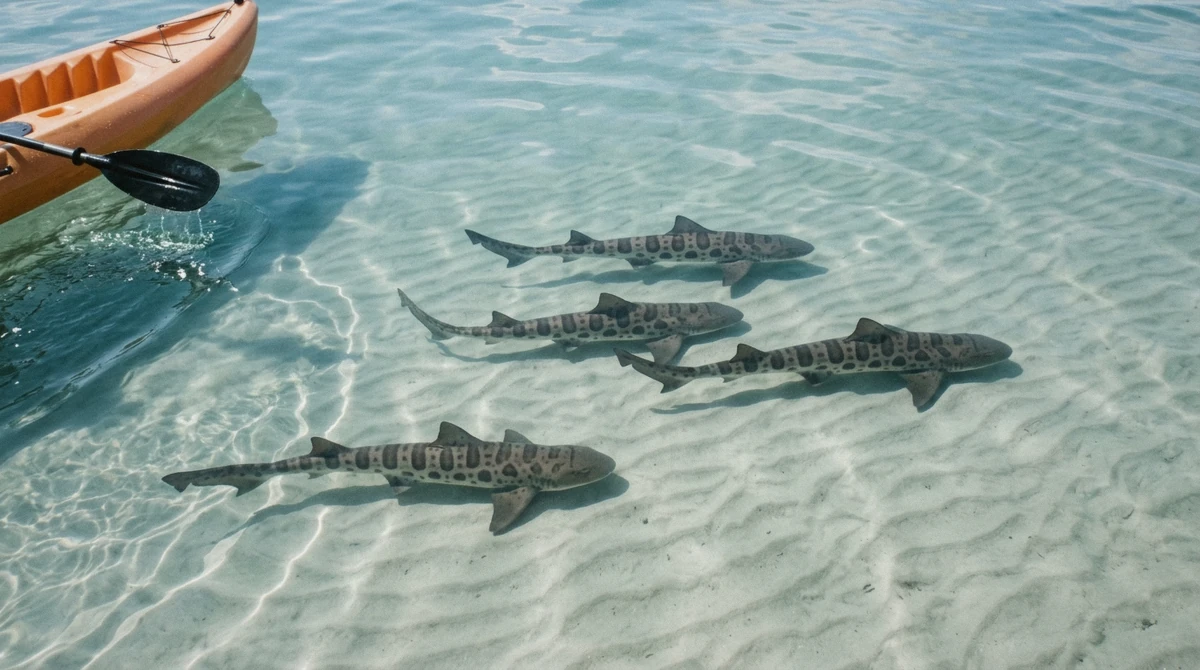
Leopard sharks show up in the warm shallows off La Jolla Shores from June through October, with the core of the season running August and September. A few linger into December some years. The sharks themselves, why there are hundreds of them and why they're harmless, get the full story on what you'll see kayaking in La Jolla; here's just the calendar.
- June and July: sharks arriving, sightings become regular but not yet at peak numbers
- August and September: peak season, the most reliable window for a sighting
- October: numbers thinning but still present most mornings
- November and December: a lingering few, sightings become closer to lucky-day odds
Best Time of Day
Morning beats afternoon every month of the year here. Onshore wind builds through the day, so a paddle that launches flat and calm at 8 a.m. can turn choppy by 1 p.m. even in the middle of summer. We run our first launches early specifically to catch that window before the wind fills in, and the sunset tour is the one deliberate exception, trading the calm morning water for evening light on the cliffs instead.
If you only get one choice between a morning and afternoon slot on any tour, take the morning.
What If the Weather Turns?
A gray morning from the marine layer is not the same as a cancellation. Actual cancellations come from wind and swell advisories strong enough that launching or entering the caves gets genuinely unsafe, and lifeguards close cave entries independently of whether the tour itself is running. Refunds and rebooking follow the operator's own policy on the booking page, and morning slots carry the best odds of running as planned.
For the full breakdown of what actually happens if a tour gets called off, see what happens if your La Jolla kayak tour is cancelled for weather.
So, When Should You Go?
Late August through September gives you the warmest water of the year, calmer mornings than summer's peak crowds, and the best odds of a leopard shark sighting all in the same few weeks. June and July are a fair runner-up if those dates don't work, warm water traded for a gray start to the morning. December through February is the stretch to plan around rather than for, unless gray whales or dramatic winter surf are the actual draw.
Whatever month you land on, book the morning slot.
Frequently Asked Questions
What is the best month to kayak in La Jolla?
Late August through September, when water temperature peaks near 70°F and mornings run calmer than during summer's busiest weeks.
Is La Jolla kayaking good in winter?
Yes, but with trade-offs. Water drops to 58°F, a wetsuit becomes the practical choice, and swell closes cave entries more often than in any other season. Gray whales passing offshore December through March are the winter upside.
How far in advance should I book a summer kayak tour?
A week or more for weekend mornings in July and August, since those slots sell out fastest. Spring, autumn and weekday winter slots usually only need a few days' notice.
Morning or afternoon, which is better for kayaking in La Jolla?
Morning, in every month. Onshore wind builds through the day, so afternoons run choppier than mornings year-round, not just in summer.
When does the June Gloom marine layer clear up in La Jolla?
Typically by late morning, once the sun has warmed the land enough to break up the stratus cloud deck. Mornings before that can look gray even on what turns into a sunny afternoon.
When can you see gray whales while kayaking in La Jolla?
December through March, as the migration passes offshore. It's a bonus sighting on a colder, choppier paddle, not something the winter tours are built around.
How many days should I plan for if I want calm conditions?
In late August or September, most mornings qualify, so a single day is usually enough. In winter, building in two or three flexible days improves your odds of catching a calm launch.
Fourteen years of launching from the end of Avenida de la Playa has taught me that the calendar only tells you half the story. Check the actual forecast for your dates close to the day, since a great September can still throw you one blown-out morning, and a January trip can hand you the calmest water of the whole month if the swell happens to lie down. Pick your season for the reason that matters to you, warmth, whales, or crowds, and let the morning forecast make the final call.