What You'll See Kayaking in La Jolla: A Wildlife Guide

Kayaking wildlife in La Jolla almost always means sea lions hauled out on the Cove rocks and bright orange garibaldi flashing through the kelp, very often means leopard sharks in the summer shallows, and on a good day means a harbor seal, a round ray, or a gray whale passing offshore. What you won't see here is the crowded pinniped colony some visitors expect from a different California stop, and I'll explain that mix-up below. Fourteen years of paddling this reserve has taught me which of these are genuinely reliable and which are the lucky-day sightings people remember for years, and the table below sorts them honestly rather than promising you the whole list on one trip. Book one of the kayak tours of the La Jolla Ecological Reserve to see the reserve for yourself.
Quick answer
Kayaking wildlife in La Jolla almost always includes California sea lions and garibaldi, very often includes leopard sharks in season, and on a good day includes harbor seals, round rays, or a gray whale offshore. Nothing here is guaranteed on any single trip, but the reserve's protected water makes sightings genuinely common, not rare.
Key takeaways
- Sea lions and garibaldi show up on almost every trip, year-round
- Leopard sharks are a very-often sighting from June through October, peaking in August and September
- You won't see the crowded seal colony some visitors expect, that's a different stop entirely, not this reserve
- The Ecological Reserve is a 6,000-plus-acre no-take zone, which is why the sea life here is so dense
- NOAA guidance sets roughly 50 yards as the distance to keep from seals and sea lions
- See the month-by-month calendar for exact timing on our best time to kayak in La Jolla guide
At a Glance: What You'll See
Rows are ordered by how likely you are to actually see each one, strongest first, not alphabetically. "Where" names the real spot inside the reserve, not just "somewhere in La Jolla."
| Species/Sight | Where in La Jolla | Best months | How likely |
|---|---|---|---|
| California sea lion | La Jolla Cove rocks, along the paddle route | Year-round, pupping in summer | Nearly every trip |
| Garibaldi | Kelp beds across the reserve | Year-round | Nearly every trip |
| Kelp forest | Throughout the reserve | Year-round, thickest in summer | Nearly every trip |
| Brown pelican | Along the cliffs and over the water | Year-round | Most trips |
| Leopard shark | Warm shallows off La Jolla Shores | June-October, gone by December, peak August-September | Most trips in season, rare outside it |
| Cormorant | Cliff ledges near the caves | Year-round | Most trips |
| Harbor seal | Near the Cove and Children's Pool | Year-round | Regular but not every trip |
| Round ray | Sandy shallows near the shore | Warmer months | Regular but not every trip |
| Shovelnose guitarfish | Sandy bottom near the shallows | Warmer months | Regular but not every trip |
| Gray whale | Offshore, visible from the water | December-March, gone by April | Lucky-day sighting |
| Common dolphin | Open water beyond the reserve | Year-round | Lucky-day sighting |
Sea lions, garibaldi and kelp are the three you can plan around confidently. Leopard sharks belong in their own category since they're extremely reliable for four months and essentially absent the rest of the year, worth reading closer in the season section below.
Almost Every Trip
California sea lion
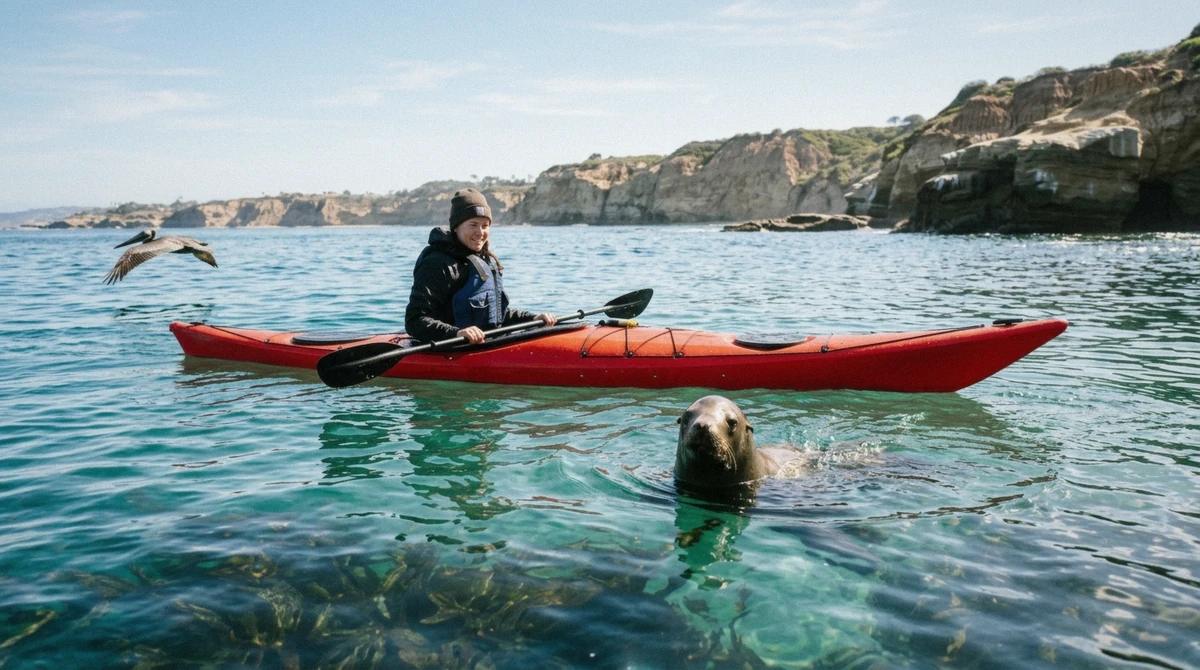
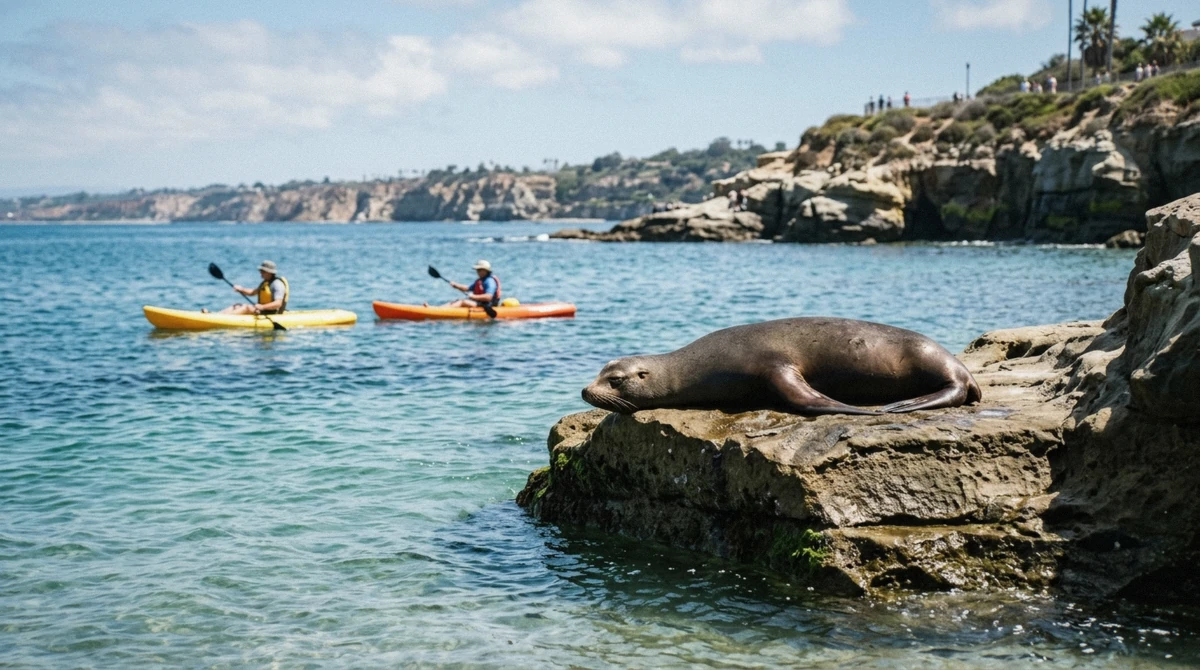
Bulky, whiskered and loud, hauled out on the rocks near La Jolla Cove or cruising alongside kayaks out of curiosity more often than fear. You'll see them on the paddle route year-round, with pupping season through the summer bringing more activity around the rocks. This is as close to a sure thing as the reserve offers, on nearly every trip we run.
One behavior worth watching for: a curious sea lion will sometimes surface right next to a kayak and hold eye contact for several seconds before diving, which catches most first-timers off guard the first time it happens.
Garibaldi
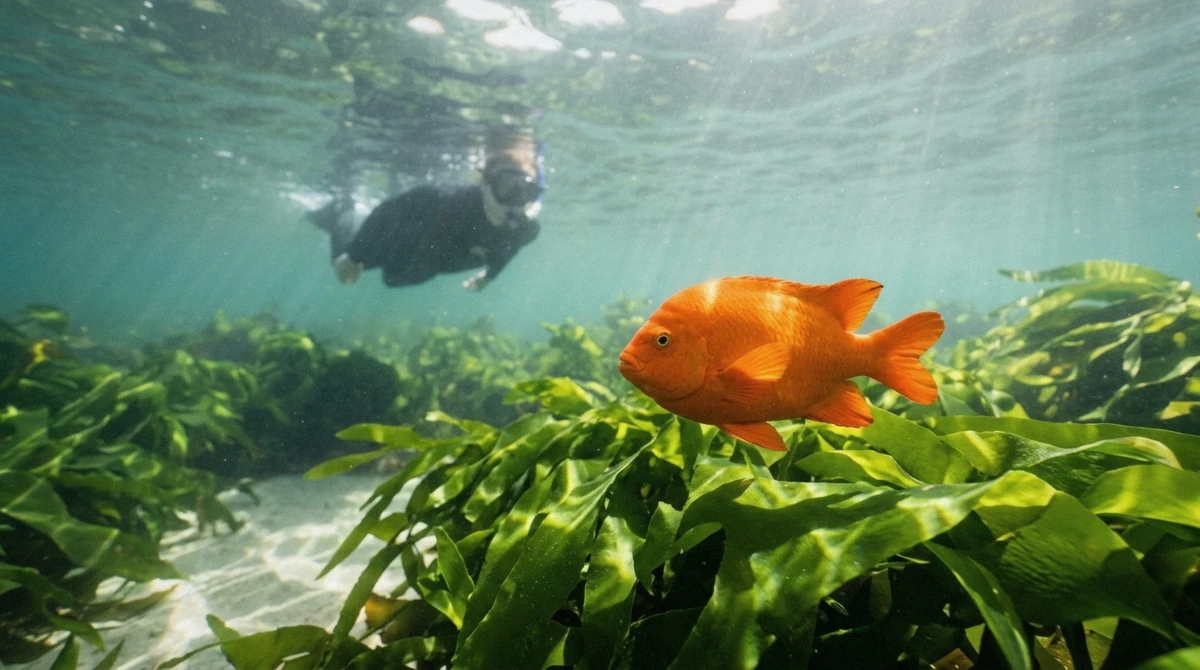
California's bright-orange state fish, unmistakable against the green-brown kelp, and fully protected, no one is allowed to take one. They hold territory around a patch of kelp and don't spook easily, so a slow paddle past a garibaldi's spot often gets you a long look rather than a flash of color and gone. Seen on nearly every trip, year-round, in the kelp beds across the reserve.
Kelp forest
Not an animal, but the backdrop for almost everything else on this list. The reserve's kelp canopy is thickest in summer and thins through winter storms, and paddling directly over it lets you look straight down into a habitat that shelters garibaldi, rays and half the fish life in the reserve. On the kayak and snorkel combo tour, the snorkel leg puts you right inside it instead of just paddling over the top.
Most Trips
Leopard shark
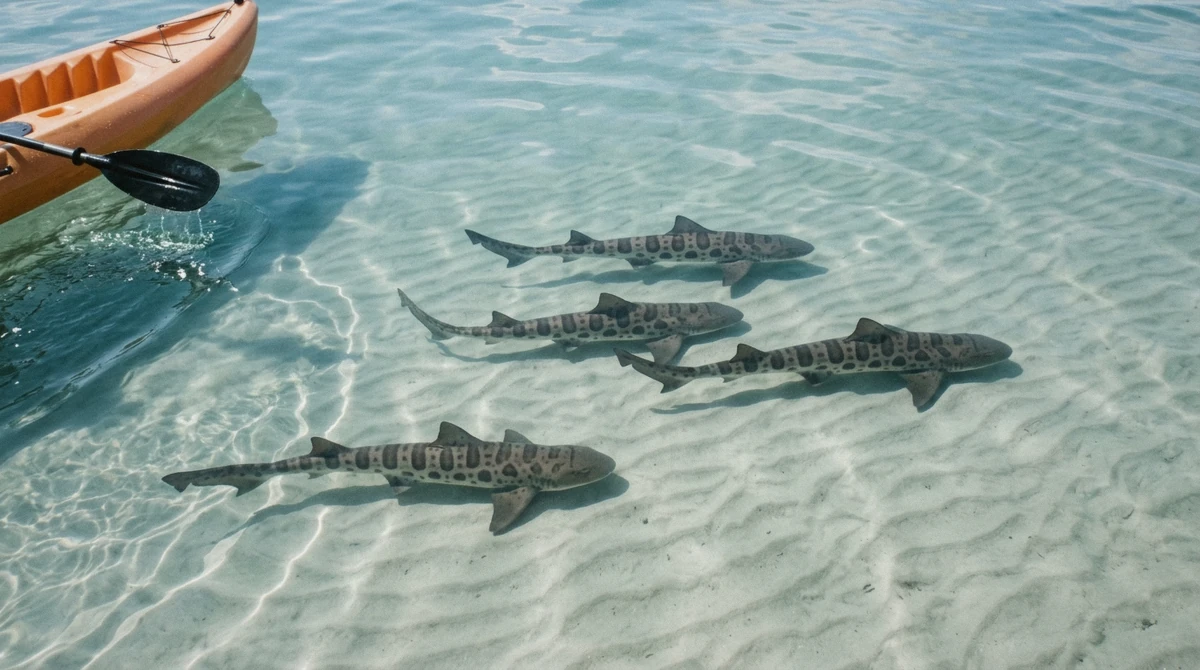
Bottom-feeding sharks with dark saddle-shaped markings, gathering by the hundreds, mostly pregnant females, in the warm shallows off La Jolla Shores. They're genuinely harmless, feeding on invertebrates in the sand, not on anything that swims. Season runs June through October, with the core and peak in August and September, and a few lingering into December most years.
Full season mechanics and month-by-month timing live on the best time to kayak in La Jolla. Best odds come early morning, at low tide, on a calm-surf day, since sediment stirred up by wind and waves cuts visibility fast.
Brown pelican
Large, prehistoric-looking birds that fold their wings and dive straight down into schools of baitfish, close enough to a kayak sometimes to feel the splash. Seen along the cliffs and over open water on most trips, year-round, and one of the easiest wildlife sightings in the reserve for a kid to spot and get excited about.
Cormorant
Dark, long-necked birds that perch on the cliff ledges near the sea caves with wings spread out to dry, a genuinely odd-looking posture the first time you see it. Present on most trips year-round, most visible on the paddle in toward the seven sea caves, where the ledges give them a steady perch above the water.
Lucky-Day Sightings
Harbor seal
Smaller and more shy than sea lions, harbor seals haul out near the Cove and the Children's Pool rather than along the open paddle route, so a sighting from the kayak itself is a regular-but-not-guaranteed bonus rather than an every-trip event. Year-round presence, best odds near the rockier stretches close to the Cove.
Round ray and shovelnose guitarfish
Both glide low over sandy patches near shore, easy to miss unless the water is calm and clear enough to see the bottom. Round rays are flat and disc-shaped; shovelnose guitarfish look like a cross between a shark and a ray, with a pointed snout. Warmer months give the best odds, since that's when both species move into the shallower sand flats.
Gray whale
The genuine lucky-day sighting on this list: gray whales pass offshore from December through March, gone by April, visible as a distant spout or a surfacing back rather than a close encounter. Nobody books a kayak tour specifically for whales here, since the sighting distance is real and the season overlaps with the coldest, choppiest water of the year, but a passing whale on a calm winter morning is the kind of thing paddlers still talk about years later.
Common dolphin
Occasional pods pass through open water beyond the reserve, a true lucky-day sighting with no reliable season or location to target. If you see one, consider it a bonus on top of everything else the trip delivers.
Where Each One Lives: Spots and Sites
Organizing by location rather than species shows how the reserve's geography maps to what you'll see at each stretch of the paddle.
| Site | Species you'll see | Access |
|---|---|---|
| La Jolla Cove rocks | Sea lions year-round, harbor seals regularly | Passed on the paddle route on every tour |
| Leopard-shark shallows off La Jolla Shores | Leopard sharks June-October, round rays and guitarfish in warmer months | Reached by all kayak tours crossing the reserve |
| Kelp beds across the reserve | Garibaldi, the bulk of the reef fish life | Surface view on any tour, up close on the kayak and snorkel combo |
| Cliffs near the seven sea caves | Cormorants and pelicans, perched and diving | Best seen on the approach on the sea caves tour |
| Open water beyond the reserve | Occasional dolphin pods, gray whales December-March | Visible from any tour, entirely a lucky-day sighting |
Visibility matters as much as presence. Calm, low-wind mornings let you actually see what's under the surface, sharks and rays especially, while an afternoon with wind-stirred sediment can hide the same animals that were obvious three hours earlier.
When to See Them
Sea lions, garibaldi and pelicans hold steady year-round, so timing mostly matters for leopard sharks: present June through October, peak August and September, gone by December most years. Gray whales are the other seasonal swing, passing offshore December through March and absent the rest of the year. For the full month-by-month breakdown across water temperature, crowds and conditions, see our best time to kayak in La Jolla guide rather than a repeat of the calendar here.
What You Won't (Usually) See
The most common mix-up I hear at the dock: visitors expecting a large, easily approached seal colony similar to spots further up the California coast. That's not this reserve. La Jolla's sea lions and seals haul out in smaller numbers around the Cove rocks, not in the open colonies some other stops are known for, and the confusion usually comes from a photo or a blog post about a different destination entirely.
What you get instead is sea lions genuinely swimming alongside your kayak in open water, a different and, in my opinion, better experience than watching a colony from a distance on land.
Rules of the Reserve
The La Jolla Ecological Reserve is a 6,000-plus-acre no-take zone, part of the San Diego-La Jolla Underwater Park, meaning nothing gets fished, collected or removed anywhere inside it. NOAA marine wildlife viewing guidelines set roughly 50 yards as the distance to keep from seals and sea lions: never approach closer, never touch or feed one, and never block its path back to the water. CDFW's marine protected area rules back the same no-take standard. These rules are exactly why the reserve holds as much life as it does, not red tape standing between you and a better photo.
What to Prioritize, By What You Came For
If leopard sharks are the whole reason you're booking
go August or September on an early morning, low-tide slot, the peak of the season
If you want the best odds of a close sea lion encounter
any month works, but summer pupping season brings the most activity around the Cove rocks
If you're hoping for a gray whale sighting
book December through March and treat it as a bonus, not the main event, since the sighting distance is real
If you want the reef fish and garibaldi up close, not just from the kayak
book the kayak and snorkel combo tour instead of a kayak-only trip
If you're bringing a child who gets nervous around sharks
lead with sea lions and garibaldi first, both are dramatic, harmless-looking and easy to enjoy without the shark conversation at all
How to Maximize What You See
A handful of habits genuinely change how much you see on a given trip, based on what's worked for me over fourteen years on this water. If you want to bring the sightings home, our guide to the best photo spots on and off the water covers angles, light and the gear that survives a splash.
- I always push for the earliest launch slot, since calmer morning water shows sharks and rays that afternoon wind and chop hide
- I paddle slow and quiet past a kelp bed rather than cutting straight through it, since garibaldi hold still for a slow approach and scatter from a fast one
- I ask the guide before assuming a shape in the water is just a shadow, since guides spot rays and guitarfish on the sand well before most guests do
- I check the tide table the night before a shark-season trip, since low tide puts more of the shallow water in the sharks' preferred depth
- I keep my eyes on the cliffs as much as the water on the approach to the caves, since pelicans and cormorants are easy to miss if you're only looking down
- I never chase a sea lion that's moving away, since the curious ones that approach on their own give the better encounter anyway
Wildlife Sightings Kids Love Most
A few of these are especially good for young kids, easy to spot and none of them scary once explained. Sea lions are the obvious favorite, since they're big, visible from a distance, and often curious enough to approach the kayak on their own. Garibaldi's bright orange color makes them the easiest fish to point out in the kelp.
Pelicans diving for fish are dramatic enough to hold a kid's attention without any real risk involved. Leopard sharks, once you explain they feed on the bottom and have never bitten anyone here, tend to become the trip highlight rather than a source of nervousness.
Frequently Asked Questions
What's the most common thing you'll see kayaking in La Jolla?
Sea lions and garibaldi, both seen on nearly every trip year-round. They're the reserve's most reliable sightings by a wide margin.
Will I definitely see leopard sharks?
Not guaranteed, but they're a most-trips sighting from June through October, with August and September the most reliable window. Outside that season, sightings drop to rare.
Are there sharks in La Jolla dangerous to kayakers?
The leopard sharks you'll actually see are harmless bottom-feeders that have never bitten anyone here. For the full safety picture beyond wildlife, see our guide to whether kayaking in La Jolla is safe.
Can I touch the sea lions or seals?
No. NOAA guidance sets roughly 50 yards as the minimum distance, and touching, feeding or blocking a seal or sea lion's path is never allowed.
What's the rarest thing you might see kayaking in La Jolla?
A gray whale passing offshore, December through March, or an occasional dolphin pod. Both are genuine lucky-day sightings with no way to target them reliably.
Do I need to snorkel to see the wildlife, or is kayaking enough?
Kayaking alone shows you sea lions, garibaldi from the surface, pelicans, and leopard sharks in season. Snorkeling on the combo tour gets you closer to the kelp forest and reef fish, but it isn't required to see most of this list.
Why don't I see the seal colony everyone talks about in La Jolla?
That's usually a mix-up with a different California destination known for a large open colony. La Jolla's sea lions and seals haul out in smaller numbers around the Cove rocks and swim alongside kayaks in open water instead.
No two trips out of this reserve look exactly alike, which is part of what keeps me doing this after fourteen years. Sea lions and garibaldi you can count on. Leopard sharks you can plan a whole trip around if the season lines up.
Everything else, the seal on the rocks, the whale offshore, the guitarfish on the sand, is the kind of sighting that makes one paddle memorably different from the last.